Most "best open-source manufacturing software" lists are written by someone who has never had to keep a machine running: forty logos, no opinions, half the projects abandoned. This one is organised the way a shop actually stacks software, from the model on the screen to the number on the wall, and it only includes projects I'd be comfortable recommending for real work in 2026, with honest notes on where each one stops.
Two ground rules. Open source isn't free of cost: you pay in setup, integration, and someone who owns it. And licenses matter: a copyleft license is no problem for internal use, but it changes things if you ship software to customers. Every pick below has its license listed for that reason.
1. CAD and CAM
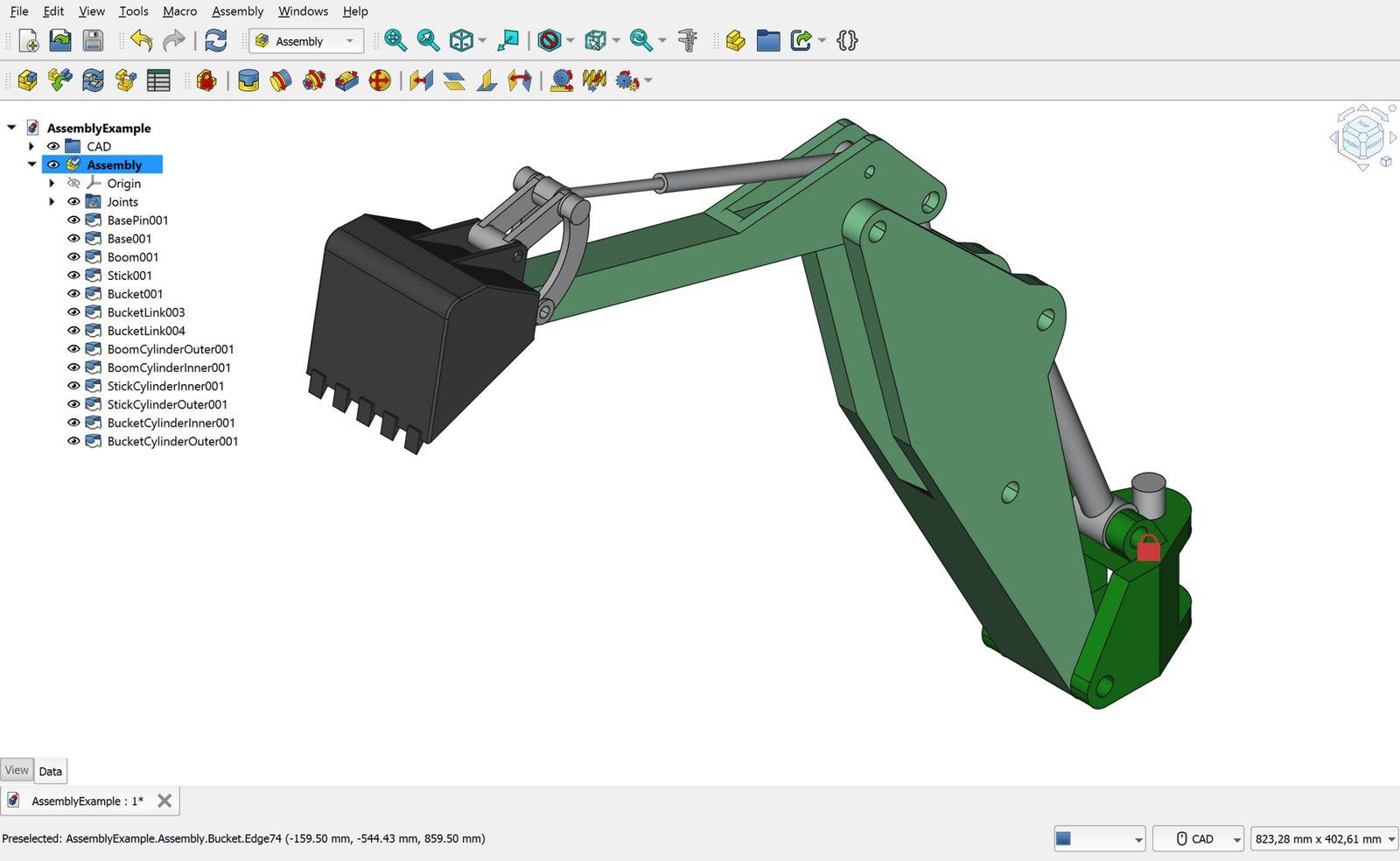
- [FreeCAD](https://www.freecad.org) (LGPL). The open-source parametric modeller, and finally a serious one: 1.0 (late 2024) fixed the infamous topological-naming problem and added a built-in Assembly workbench, and 1.1 (March 2026) brought a rebuilt CAM tool-library system and a long list of UX fixes. Its CAM workbench generates real toolpaths with post-processors for common controls. Honest limit: it's not Mastercam for 5-axis production, but for fixtures, 2.5D work, and anyone learning, it's excellent. And it's fully scriptable in Python, so everything you'd automate in Fusion has an open equivalent.
- [Kiri:Moto](https://grid.space/kiri) (MIT). Browser-based slicer and CAM for 3D printing, CNC milling, and laser. Great for quick 2.5D jobs and teaching; not a production CAM replacement.
- [OpenSCAD](https://openscad.org) / [CadQuery](https://github.com/CadQuery/cadquery) (GPL / Apache 2.0). Code-defined CAD. CadQuery in particular is plain Python on the OpenCascade kernel, perfect for generating families of parts from a spreadsheet.
2. Machine control
- [LinuxCNC](https://linuxcnc.org) (GPL v2). The mature open-source CNC controller: real-time motion on a PC, HAL for wiring any signal to anything, used for retrofits of mills, lathes, routers, and grinders. 2.9 is the stable line; 2.10 was in pre-release as of autumn 2026. If you're retrofitting an old machine whose control died, this is the serious option.
- [grblHAL](https://github.com/grblHAL) (GPL v3). The modern descendant of Grbl for 32-bit microcontrollers; the brains of many routers, small mills, and lasers. Pair with a G-code sender such as [CNCjs](https://cnc.js.org) (MIT).
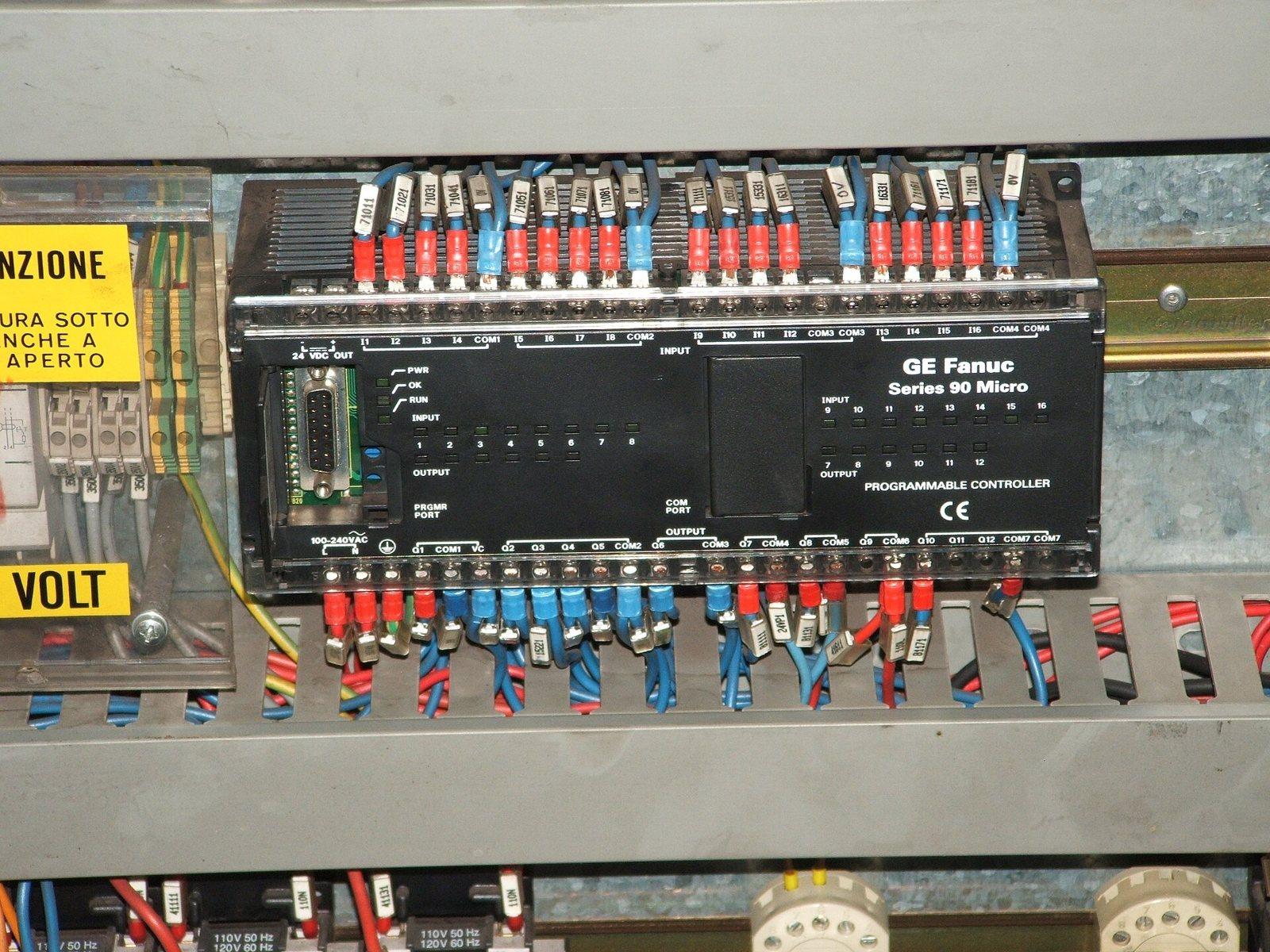
- [OpenPLC](https://autonomylogic.com) (GPL v3). An IEC 61131-3 PLC runtime (ladder, structured text, function blocks) for Raspberry Pi, PCs, and microcontrollers. Version 4 is current, with an active 2026 release cadence. Great for test rigs, training, and small automation; certified safety functions stay on certified hardware.
3. Machine connectivity
This is the layer where open source is strongest, and where it saves the most money compared with per-machine monitoring subscriptions:
- [MTConnect cppagent](https://github.com/mtconnect/cppagent) (Apache 2.0). The reference MTConnect agent from the MTConnect Institute, actively released through 2026. Pair with an adapter for machines that don't speak it natively (legacy CNC, FANUC bridge).
- [asyncua](https://github.com/FreeOpcUa/opcua-asyncio) (LGPL v3) and [open62541](https://www.open62541.org) (MPL 2.0). OPC UA client/server in Python and C respectively; how you talk to Siemens, Heidenhain, and most modern controls that expose OPC UA.
- FANUC-specific: pyfanuc implements the FOCAS protocol in pure Python (no DLL, runs on Linux), and the Ladder99 fanuc-driver is a configurable FOCAS collector. Check each project's license file before you redistribute anything built on them.
- [Eclipse Mosquitto](https://mosquitto.org) (EPL/EDL). The standard lightweight MQTT broker, the backbone of most "unified namespace" architectures.
- [Node-RED](https://nodered.org) (Apache 2.0). Flow-based wiring between protocols, databases, and APIs. Ideal for integration glue that a non-programmer must maintain; for anything with real logic, write code instead.
Which protocol, though?
Picking libraries is easy once you've picked a protocol. The MTConnect vs OPC UA vs FOCAS decision guide and the controller-by-controller Python guide cover that choice in depth.
4. Data storage and dashboards
- [PostgreSQL](https://www.postgresql.org) (PostgreSQL License). Store machine states, part counts, and quality data here first. Add the [TimescaleDB](https://github.com/timescale/timescaledb) extension when time-series tables get big (core Apache 2.0; some features under the source-available Timescale License).
- [InfluxDB 3 Core](https://github.com/influxdata/influxdb) (MIT/Apache 2.0). The open-source time-series engine for high-rate sensor data, such as vibration and current. Check its current retention and limits against your use case; the Core/Enterprise split matters.
- [Grafana](https://grafana.com/oss/grafana/) (AGPL v3). The dashboard layer. State timelines, alerting, kiosk mode for wall screens. The Grafana machine dashboard post builds a complete shop-floor screen with it.
5. ERP, MRP, and MES
- [ERPNext](https://erpnext.com) (GPL v3). The most complete fully open-source ERP for manufacturing: BOMs, work orders, job cards, routing, MRP, quality inspection, and stock, all in the open edition. It has a real learning curve; budget for implementation help or a committed internal owner.
- [Odoo Community](https://www.odoo.com) (LGPL v3). Polished and modular, with MRP in the Community edition, but several manufacturing features people expect (PLM, quality, maintenance, advanced MES views) are Enterprise-only. Read the edition comparison before you commit.
- [qcadoo MES](https://www.qcadoo.com) (AGPL Community Edition). A focused MES for production planning and tracking in small and mid-size plants. Narrower than an ERP, simpler to stand up.
ERP is where open source projects fail
Not because the software is weak: because ERP is an organisational change project wearing a software costume. Whatever you choose, the cost is in data cleanup, process decisions, and training. If nobody in the business owns that, no license fee (or lack of one) will save it.
6. Quality, vision, and analysis
- [OpenCV](https://opencv.org) (Apache 2.0). The machine-vision workhorse, from presence checks to calibrated measurement.
- The scientific Python stack (BSD): NumPy, SciPy, pandas, and Matplotlib cover SPC charts, FFT vibration analysis, capability studies, and reporting.
- [CalculiX](http://www.calculix.de) (GPL) with FreeCAD's FEM workbench. Real finite-element analysis for fixture stiffness, bracket checks, and thermal questions.
7. Local AI
- [Ollama](https://ollama.com) (MIT) plus open-weight models. Run language models entirely on your own hardware, which matters for shops with air-gapped networks or NDA-bound documents. The RAG over machine manuals build runs on exactly this.
- [Model Context Protocol](https://modelcontextprotocol.io) SDKs (open specification and SDKs). The standard way to let an assistant call your tools. See build an MCP server for your CNC machines.
The licensing cheat sheet
| License family | Examples above | Internal use | If you distribute modified software |
|---|---|---|---|
| Permissive (MIT, Apache, BSD, PostgreSQL) | cppagent, OpenCV, Node-RED, Ollama, Kiri:Moto, Mosquitto (EDL option) | Free | Keep notices; that's about it |
| Weak copyleft (LGPL, MPL, EPL) | FreeCAD, asyncua, open62541, Odoo CE | Free | Share changes to the library itself |
| Copyleft (GPL) | LinuxCNC, ERPNext, OpenPLC, grblHAL | Free | Share source of the combined work |
| Network copyleft (AGPL) | Grafana, qcadoo MES | Free | Also applies if users interact with it over a network |
How I'd actually start
- 1Connectivity first. cppagent + adapters, or OPC UA via asyncua, into PostgreSQL, with Grafana on top. It's the cheapest stack here and the one with the fastest visible payoff.
- 2Then quality data. OpenCV and the Python stack, close to the machines, writing into the same database.
- 3ERP last, and only with an owner. The tools are good; the project is hard.
Open source won't run your shop for free. It will let you own every layer of it, and in manufacturing, owning your data is the whole game.
Know a project that belongs here, or one that's quietly died? Tell me. This list gets a refresh every year, and practitioner tips are what make it better than the logo walls.