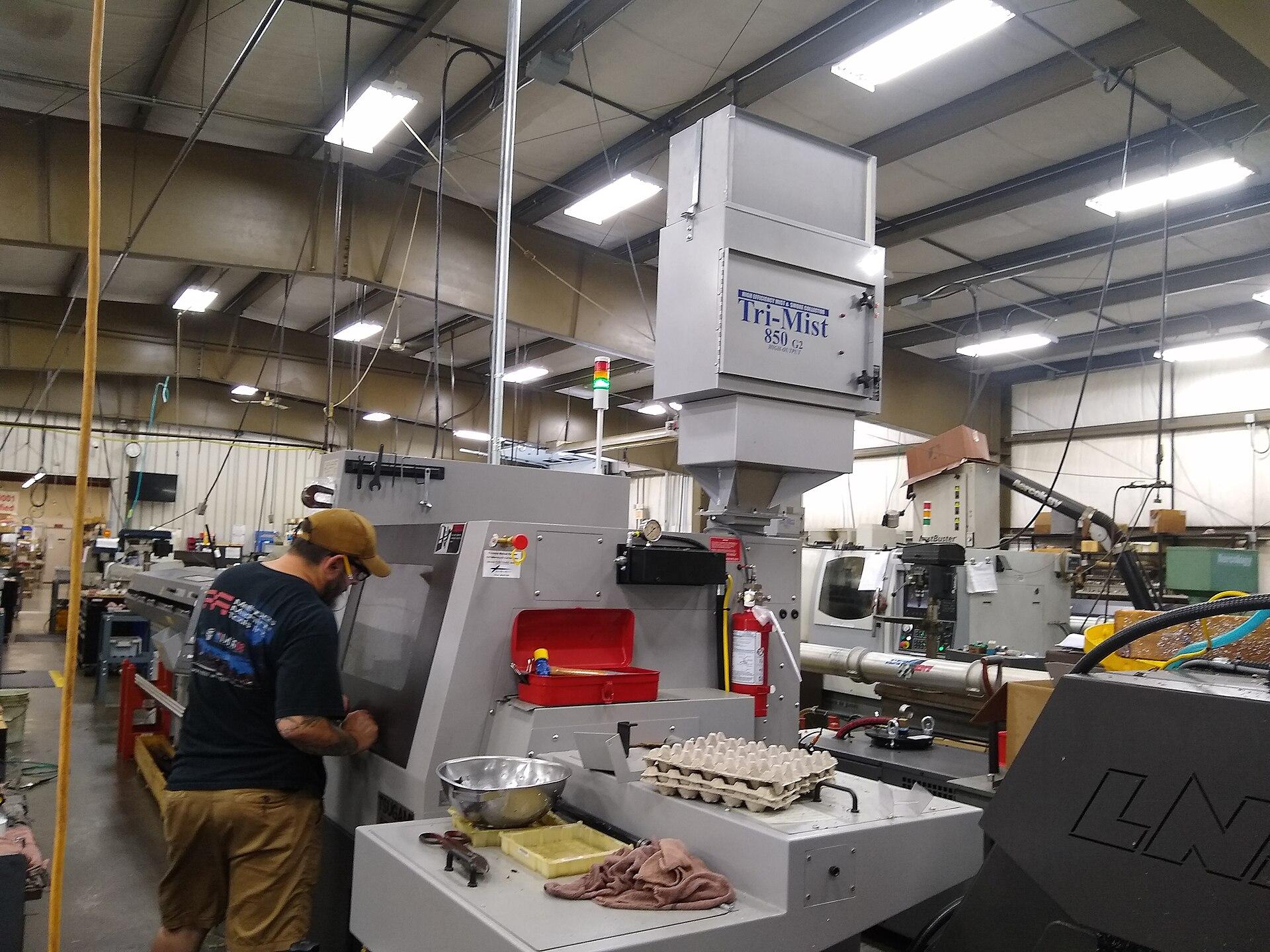
Whenever this comes up, people imagine the wrong thing — a manufacturing engineer quitting the shop to write web apps full time. That's not the case for it. The case is much smaller and much more practical: the floor is full of repetitive, error-prone, five-minute tasks, and a little code makes them disappear.
I've shipped a few of these. None of them is impressive on its own. Together they changed how I work.
Four small tools
- Windows Drive Mapper (Python + PyQt) — one-click mapping of network and local drives, with duplicate-letter prevention so non-technical users stop making the same config mistake.
- Auto Timesheet Updater (Python + Excel) — turns a recurring manual update into a button.
- Auto Tasks Checker (Python + ERP API) — watches the ERP so a human doesn't have to keep refreshing it.
- ERP ↔ Cell Manager bridge (Python + Tkinter) — the big one, covered here.
The pattern
Every one of these started as a task I was annoyed to do twice. That annoyance is the signal. If you find yourself doing the same clicks every morning, that's a tool waiting to be written.
What coding actually buys a manufacturing engineer
- 1Leverage — you fix a task once instead of paying its cost every day.
- 2Reliability — a validated script doesn't transpose a serial number at the end of a long shift.
- 3Credibility — when you can connect the ERP, the cell, and the spreadsheet, you stop waiting on IT for things that take an afternoon.
- 4Better questions — once you can automate, you start noticing which problems are worth automating, which is its own skill.
Where to start
Not with a course on data structures. Start with Python, pick one task you hate, and automate exactly that. Reading and writing Excel, calling an internal API, throwing a small GUI on it with Tkinter or PyQt — that covers a huge fraction of shop-floor automation. The depth comes later, pulled in by real problems.
You don't have to become a software engineer. You just have to stop doing the same five minutes of clicking every day.
The engineers who learn a little code don't leave manufacturing. They get better at it — because they can finally close the gap between the shop floor and the systems that run it.