A touch-trigger probe feels like it should be simple: the stylus touches the surface, the probe trips, you record the point. But the trip doesn't happen exactly at contact. The stylus deflects, the tip slides along the surface before the mechanism triggers, and the recorded point is offset from the true one. That offset — the sensing distance — is measurement error, and on inclined or curved surfaces it isn't constant.
My MASc thesis at Concordia was about predicting that error with FEA — without simplifying the probe geometry the way conventional models do — and then compensating it.
Why the usual models fall short
Conventional approaches simplify the probe and ignore the sliding effect, which leaves real, uncompensated error on the table. The whole premise of the thesis was that if you model the probe honestly — real geometry, real contact, including sliding — you can predict the sensing distance accurately enough to subtract it back out.
Sliding is the part everyone drops
It's easier to assume the probe triggers straight down at the contact point. But on an inclined or curved surface the tip slides tangentially first, and that lateral motion is exactly where the unmodelled error comes from.
The FEA approach
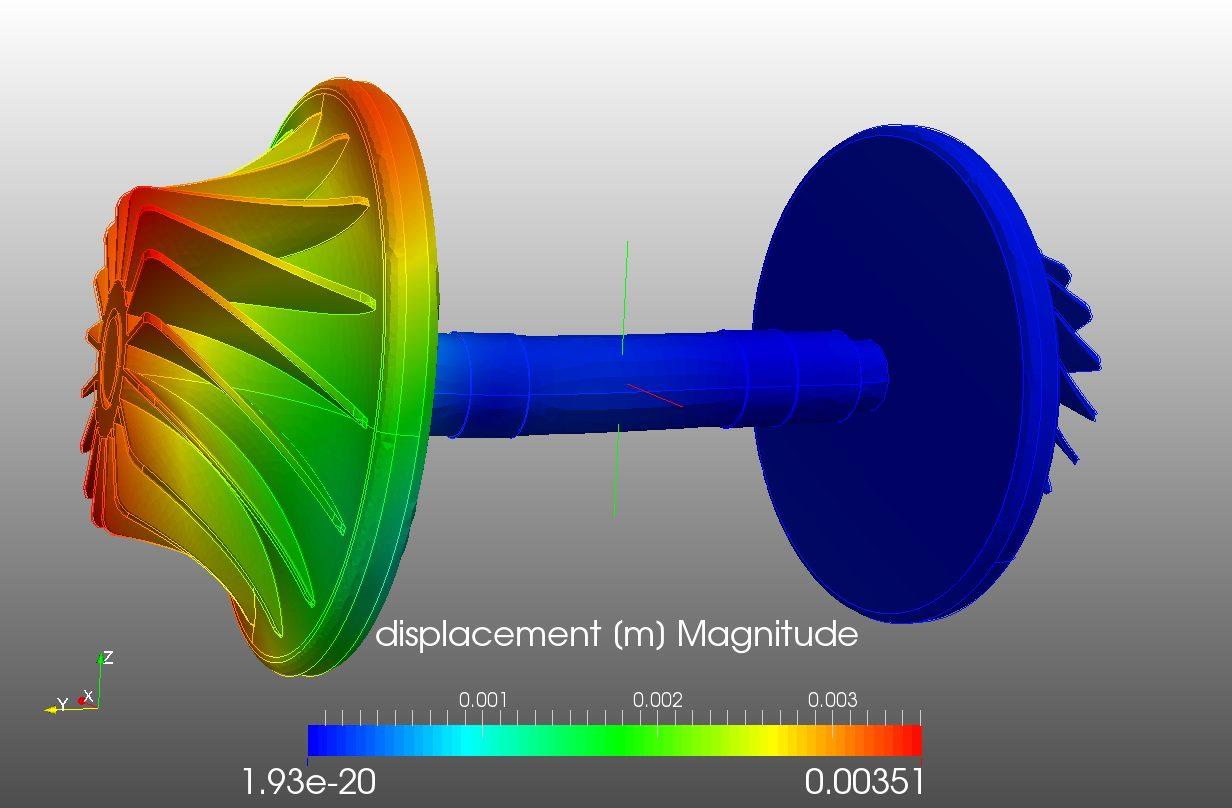
I built an FEA method that computes the sensing distance across flat, inclined, and complex curved surfaces, capturing the contact mechanics and the sliding rather than assuming them away. With a predicted sensing distance in hand for a given surface, you compensate the measured point — shift it back toward the true contact location.
Two results that matter
- A 27.7% improvement in measurement results once the predicted error — including sliding — was compensated.
- A novel algorithm to predict measurement uncertainty, so you don't just get a better number, you get a defensible bound on how good it is.
That second point is the one I carried into industry. A measurement without an uncertainty is half a measurement. Knowing how sure you are is what lets you make a real accept/reject decision — which is exactly where GD&T meets reality.
The probe never triggers where it touches. The whole game is knowing how far off it is — and by how much you can trust that.