A perfectly even endmill is a perfectly tuned tuning fork. Every flute hits the work at exactly the same interval, so every impact lands at the same frequency — and if that frequency lines up with the natural frequency of the tool, holder, or part, you get regenerative chatter. The cut goes loud, the finish goes bad, and the edge chips.
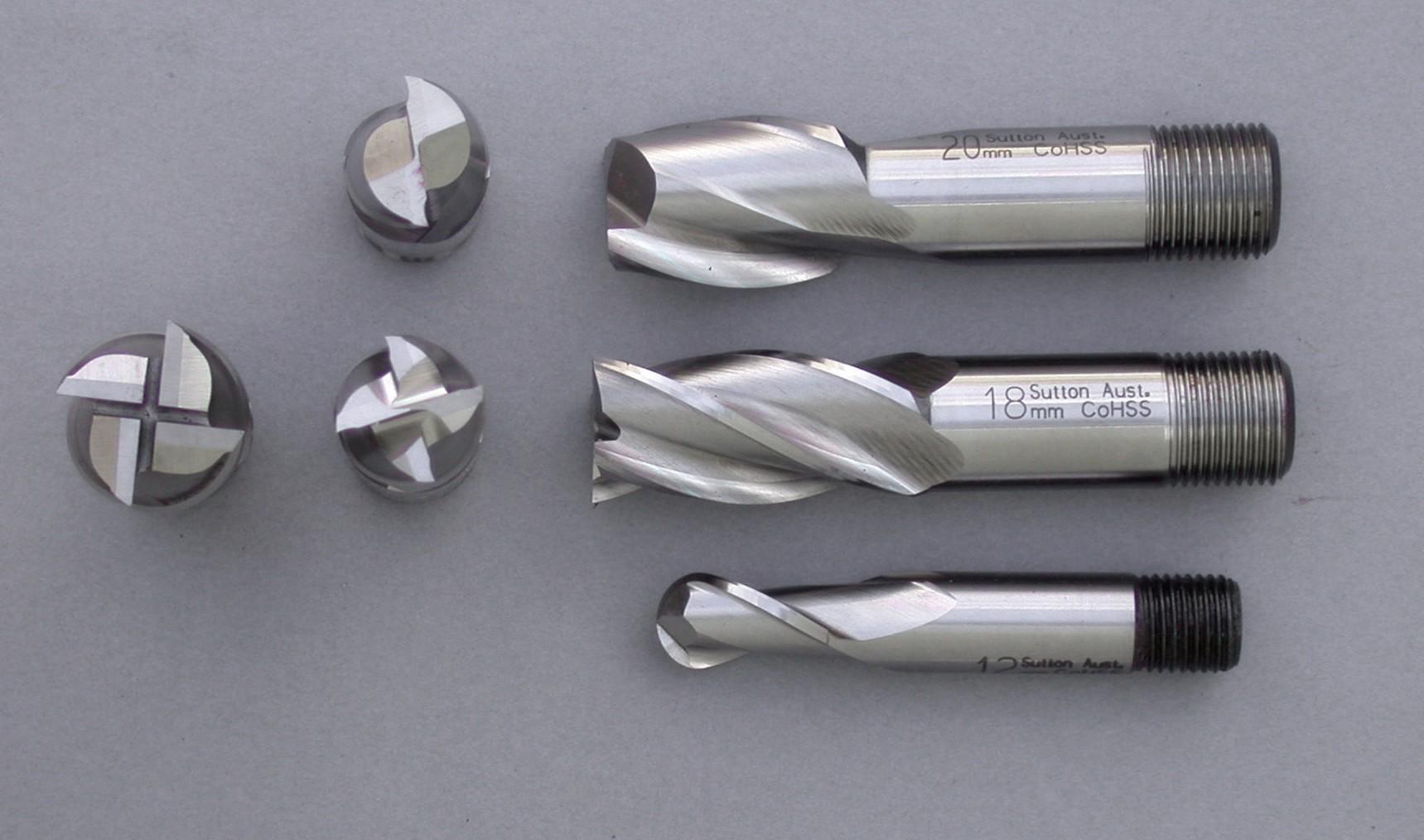
Variable flute (uneven angular spacing) and variable index (uneven helix) exist to smear that single frequency into a band, so no one frequency carries enough energy to sustain the resonance. You don't have to take my word for it — I built a chatter simulator you can hear: dial in a screaming cut, toggle variable pitch, and listen.
Chatter is regenerative
The reason chatter grows instead of just happening once is feedback. Each tooth cuts a surface left wavy by the previous tooth. If the waviness and the vibration stay in phase, every pass amplifies the last. The phase relationship depends on the time between tooth impacts — the tooth-passing period.
The key idea
If you make the time between impacts different tooth-to-tooth, consecutive teeth can no longer all cut in phase with the surface waviness. The feedback loop loses coherence, and the vibration can't build.
Two knobs: spacing and helix
- Variable flute spacing — the flutes are placed at unequal angles around the tool (e.g. 88°/92°/89°/91° instead of 90°/90°/90°/90°). Different angular gaps mean different impact intervals at a given rpm.
- Variable index / helix — each flute climbs at a slightly different helix angle, so the axial engagement timing varies along the depth of cut too. This helps most at higher axial depths.
When I reach for it
Variable geometry isn't free — it's harder to grind, harder to measure, and it can complicate chip evacuation if you push it too far. I specify it when:
- 1The customer is running long-overhang or thin-wall work where the system is springy and chatter-prone.
- 2They're already at a sensible speed/feed and still fighting finish or tool-life problems that look like vibration.
- 3The material and machine make a stiffness fix (shorter stick-out, better holder) impractical.
Don't over-vary it
Too much spacing variation unbalances the cut force per tooth and can hurt finish or wear flutes unevenly. The goal is enough irregularity to break resonance, not a randomly ground tool.
Done right, the customer hears it before they measure it — the cut goes from a scream to a hum. That's the frequency band doing its job.
A quiet cut is a tool and a structure that have agreed not to resonate. Variable geometry is how you broker that agreement.