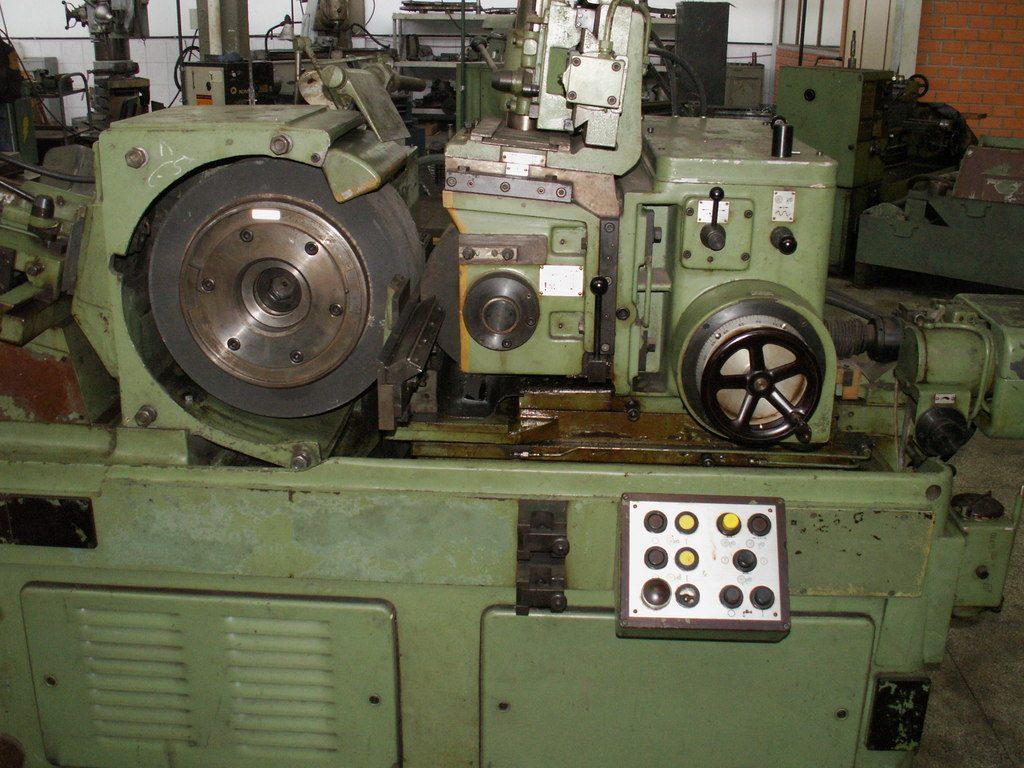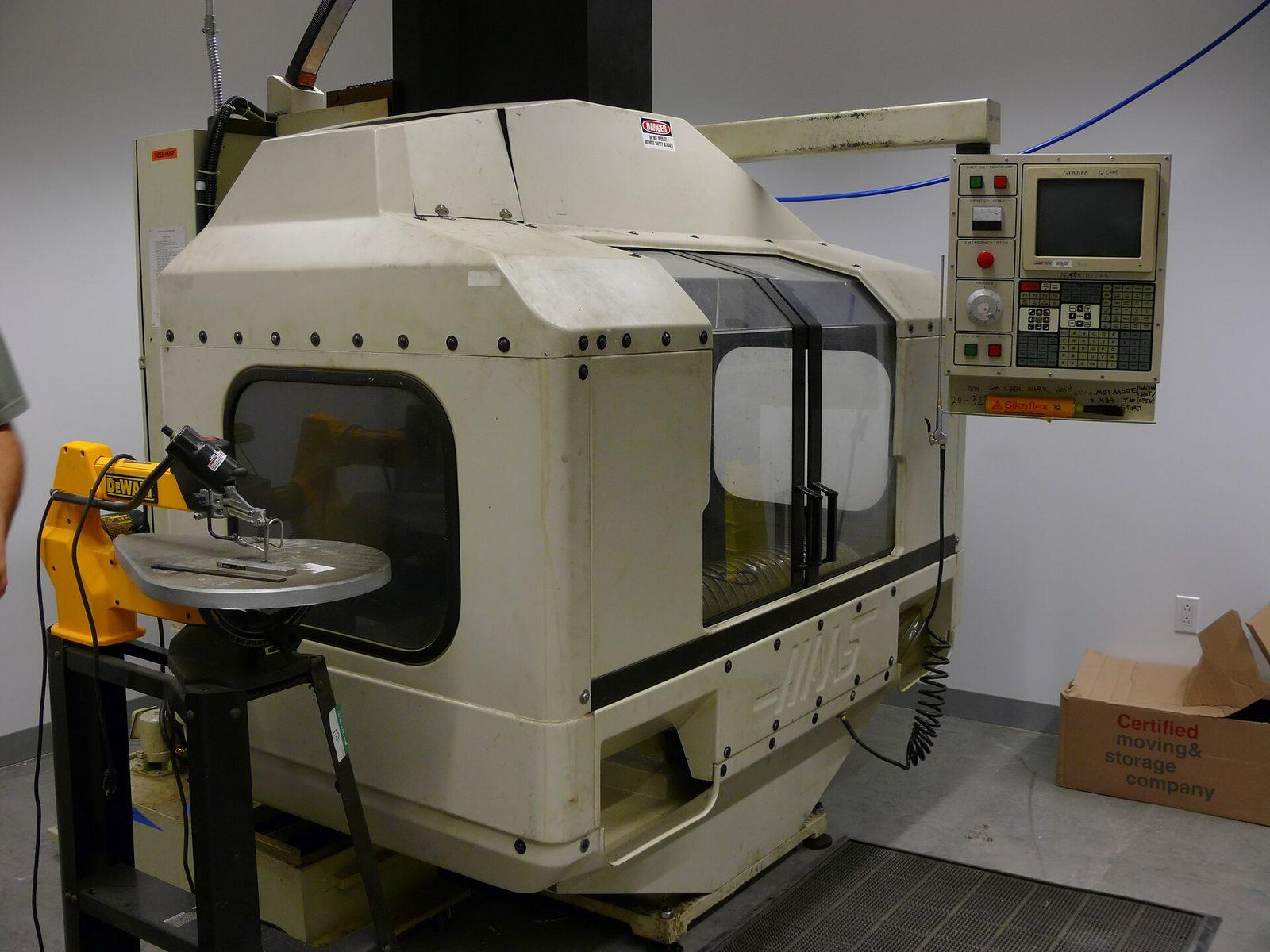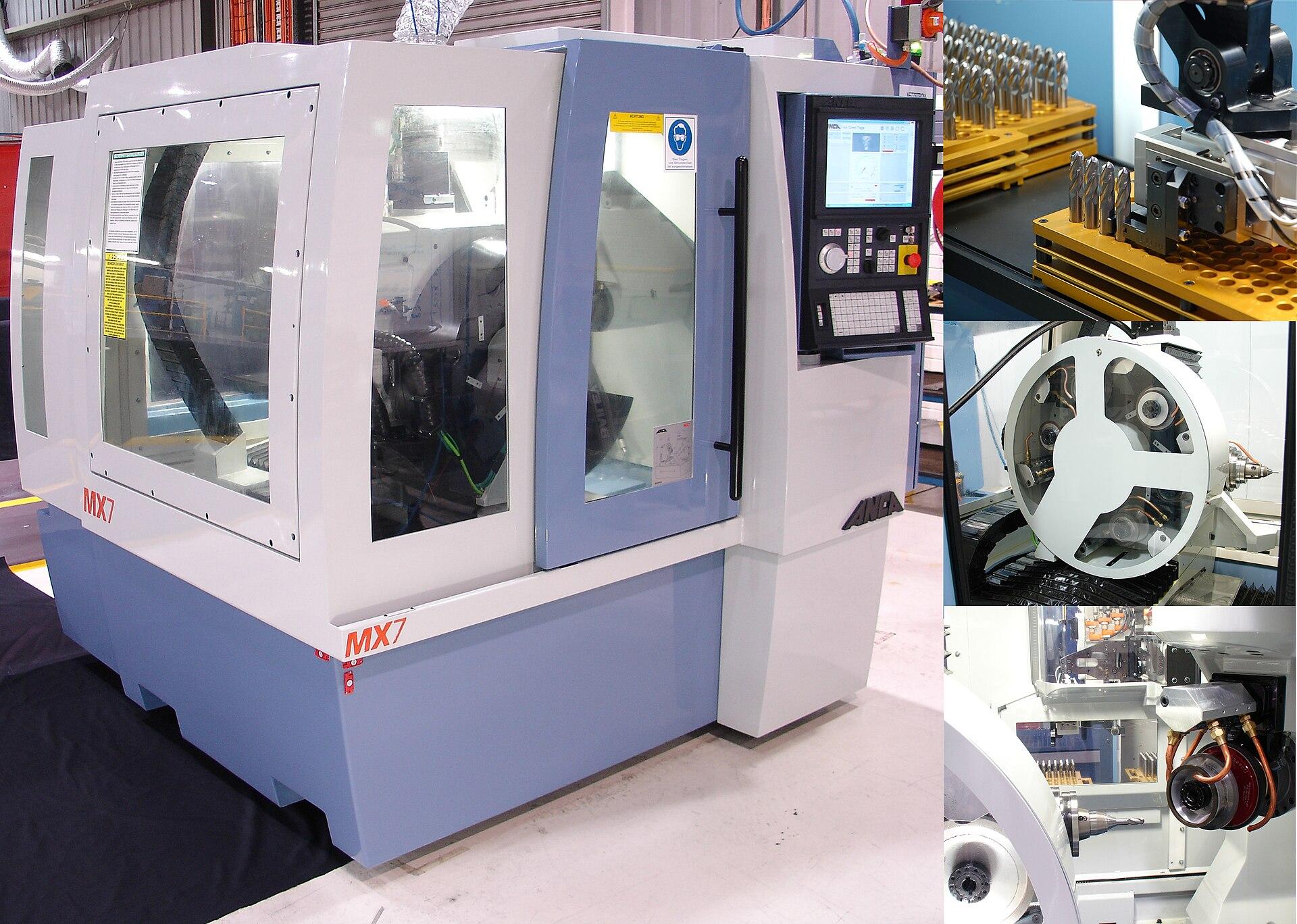
Grinding a complex tool profile means tilting the wheel to a pivot angle that lets it form every feature without any part of the wheel — or the wheel pack behind it — crashing into the tool, the blank, or the machine. Get it wrong and you find out when the grinding software rejects the program, or worse, on the machine.
The old workflow was experience plus patience: an operator picked an angle that felt right, ran the collision check, adjusted, and repeated. On a complex profile that's 3–5 minutes of guess-and-check, and it depends on having an experienced operator to guess well.
Turning judgement into geometry
The pivot angle isn't really a judgement call — it's a geometry problem with a definite answer. Given a pivot point and the profile, there's a range of angles that clear everything, and you want one comfortably inside it. So I built it in Rhino + Grasshopper:
- 1Take the tool profile and the chosen pivot point as inputs.
- 2Model the wheel and wheel pack as real solids in the same space.
- 3Sweep the pivot angle and test clearance against the tool, blank, and machine envelope.
- 4Expose the angle on a GUI slider so the user can watch collisions resolve in real time.
The angle feeds the machine directly
Because the calculation lives in the same model as the profile, the validated angle drops straight into the grinding application — no re-typing, no transcription error.
What changed on the floor
- Speed — minutes of guess-and-check became an instant, visual answer.
- Accessibility — operators without years of intuition can get a valid angle, because the tool encodes the intuition.
- Motion quality — choosing the angle deliberately produced smoother wheel motion and fewer blending issues at the kinks in the profile, where collisions and gouges like to hide.
When a task is really a geometry question, stop asking people to guess the answer — model it and let them slide to it.
This is the pattern I keep coming back to: the shop already has the geometry in CAD. The win is connecting it to the decision instead of leaving the decision to feel.